
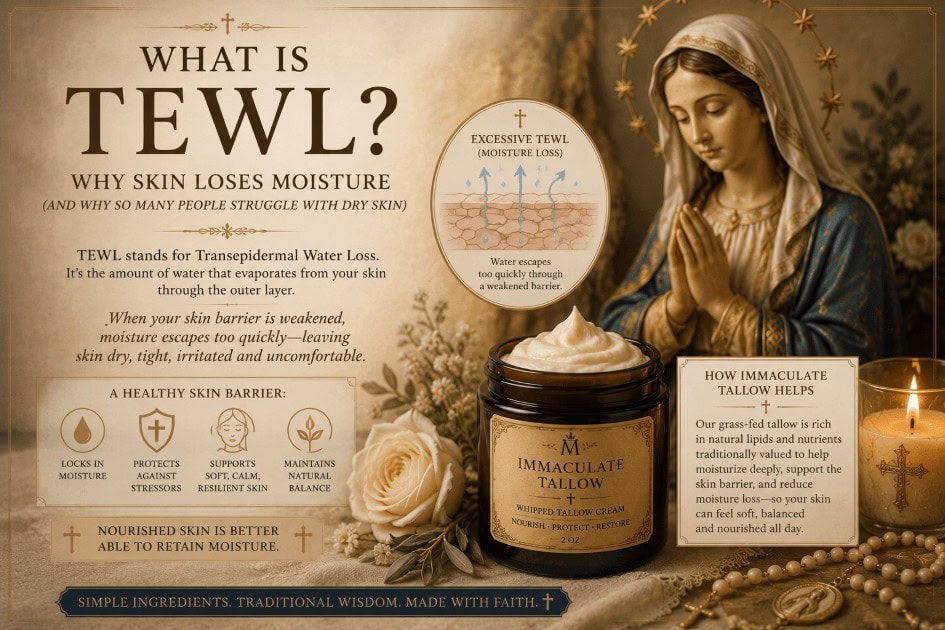
What Is TEWL?
A Comprehensive Guide to Understanding Transepidermal Water Loss and Skin Barrier Health.
Have you ever applied product after product to your skin—serums, heavy creams, oils—only for your face to still feel tight, dry, and irritated by midday? Many people assume this persistent dryness is a simple lack of hydration, leading them to add even more layers. However, the root cause is often not a lack of water, but an inability to retain it. This phenomenon is known as Transepidermal Water Loss (TEWL). For a full breakdown of how your skin works, see our Skin Health 101 guide.
What Exactly Is TEWL?
At its core, TEWL is the passive movement of water from the deep, living layers of your skin (the dermis and deeper epidermis) through the surface and into the surrounding environment. It is a natural process; in fact, healthy skin loses a very small, regulated amount of water every day. The problem arises when the skin barrier—your outermost layer—becomes compromised.
When this happens, the "seal" is broken, and water evaporates at an accelerated rate. This isn't just about feeling dry; it’s a biological stressor that leaves your skin vulnerable to pathogens, allergens, and further irritation.
The Bricks and Mortar Analogy
To visualize TEWL, dermatologists often use the "brick and mortar" analogy. Your skin cells (corneocytes) are the bricks, and the lipid matrix (ceramides, cholesterol, and fatty acids) is the mortar. When you use harsh cleansers, over-exfoliate, or live in dry climates, you degrade the mortar. When the mortar cracks, the bricks cannot stay hydrated. To understand why this balance is so crucial, read our post on Why Skin Barrier Science is Fueling the Return to Tallow.
How Is TEWL Measured?
In clinical settings, TEWL is the "gold standard" for measuring skin barrier integrity. Researchers use an evaporimeter, a specialized device that measures the density of water vapor escaping from the skin surface. High TEWL readings indicate that the barrier is damaged, while low, stable readings indicate healthy, resilient skin. While you can't measure your TEWL at home, your skin provides clear feedback: if it feels "too small" for your face, looks dull, or reacts to products that usually feel fine, your TEWL is likely elevated.
The Science of Repair: Why Occlusives Matter
You cannot "hydrate" your way out of high TEWL by just adding water-based products. If your barrier is compromised, that water will simply evaporate again. To lower TEWL, you must use occlusives. An occlusive creates a breathable, physical film on the skin that mimics your natural oils and prevents moisture from escaping.
Traditional ingredients like grass-fed tallow are unique because they are biocompatible. Unlike synthetic silicones or petroleum-based occlusives, which sit on top of the skin, high-quality tallow is recognized by the skin as a "like" substance, allowing it to integrate into your lipid matrix, repair the "mortar," and effectively lock in hydration.
Common Triggers You Can Control
1. Over-Cleansing: Many foaming cleansers contain surfactants that strip away your natural sebum—the very barrier your skin uses to keep water in. Switching to an oil-based or tallow-based cleansing method can prevent this damage.
2. Aggressive Actives: Ingredients like AHAs, BHAs, and Retinoids are effective for cell turnover, but overuse causes microscopic damage to the barrier. If your skin is flaking, pause these actives immediately.
3. Low Humidity: In winter or in air-conditioned environments, the air pulls moisture from your skin. In these conditions, a robust, fatty-acid-rich occlusive is non-negotiable.
Building a Resilient Routine
If you suspect high TEWL, simplify your routine. Remove harsh actives, prioritize gentle, lipid-replenishing fats, and focus on supporting the skin's natural design rather than forcing it to change. When you restore the barrier, the flakiness, tightness, and sensitivity often subside on their own. This is the goal of our approach at Immaculate Tallow: providing the raw, natural nourishment your skin requires to heal itself.
Work With Your Skin, Not Against It
Healthy-looking skin begins with protecting and supporting the skin barrier naturally.
Shop Our Tallow CreamsThe Sacred Collection
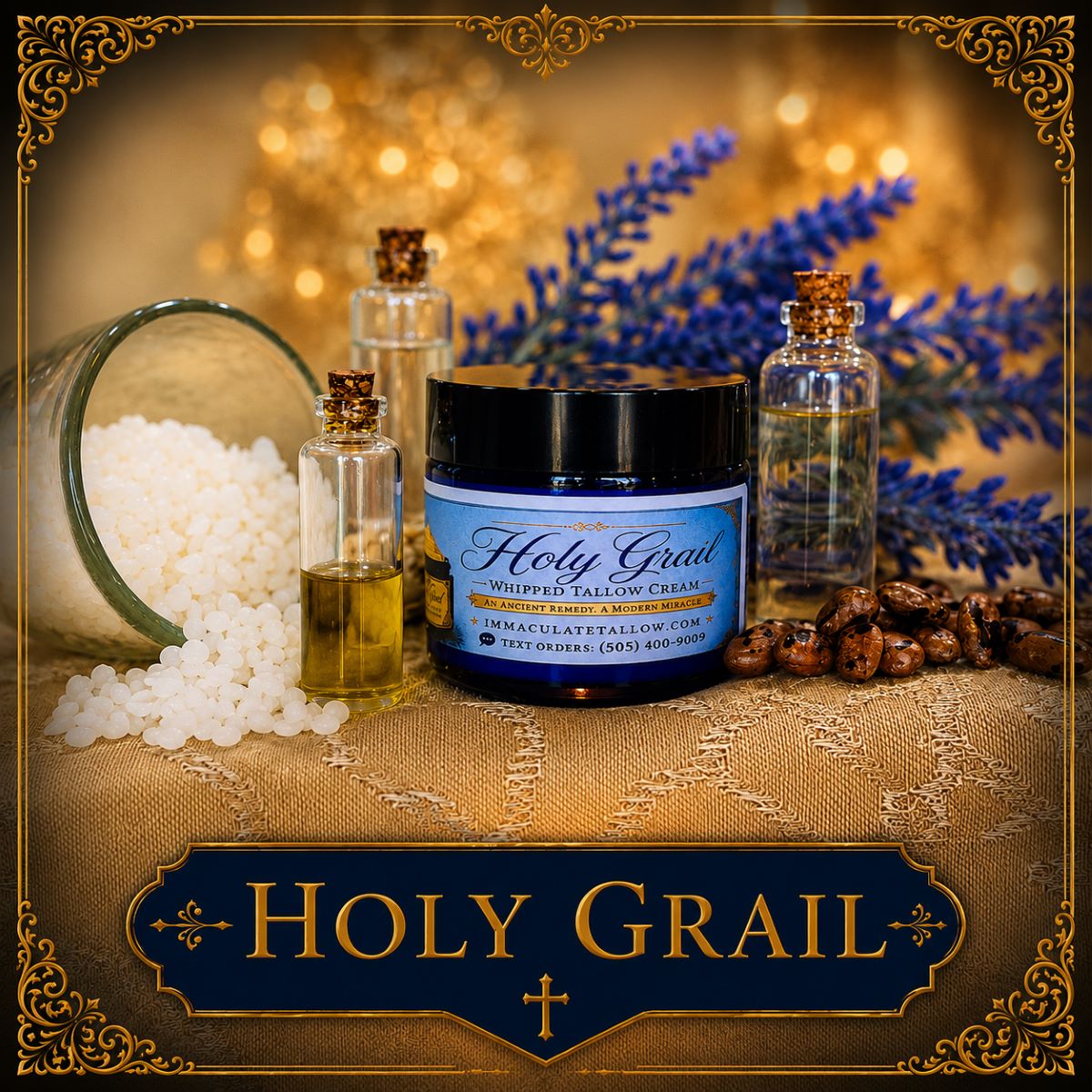
Holy Grail
Nourish & Glow →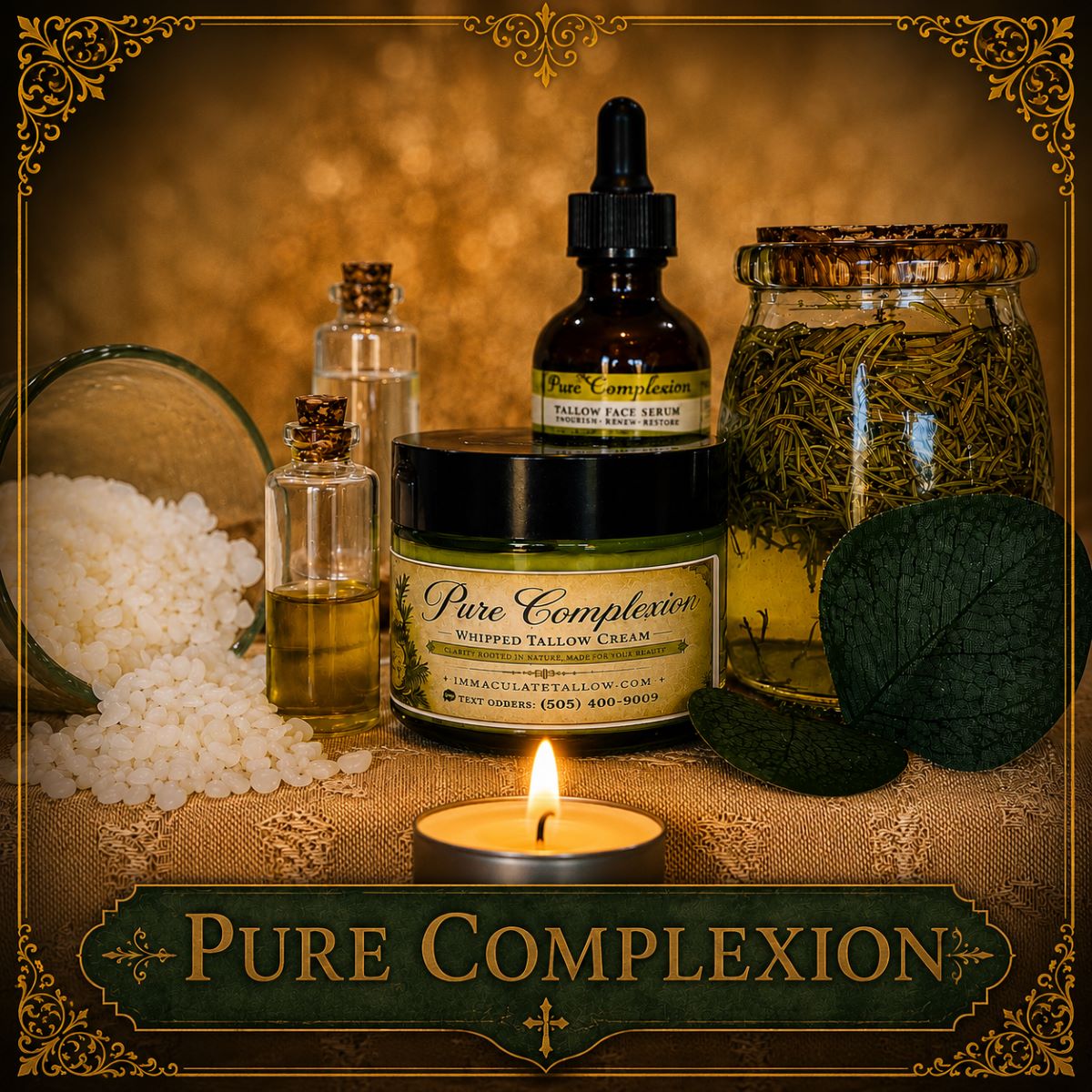
Pure Complexion
Balance & Clear →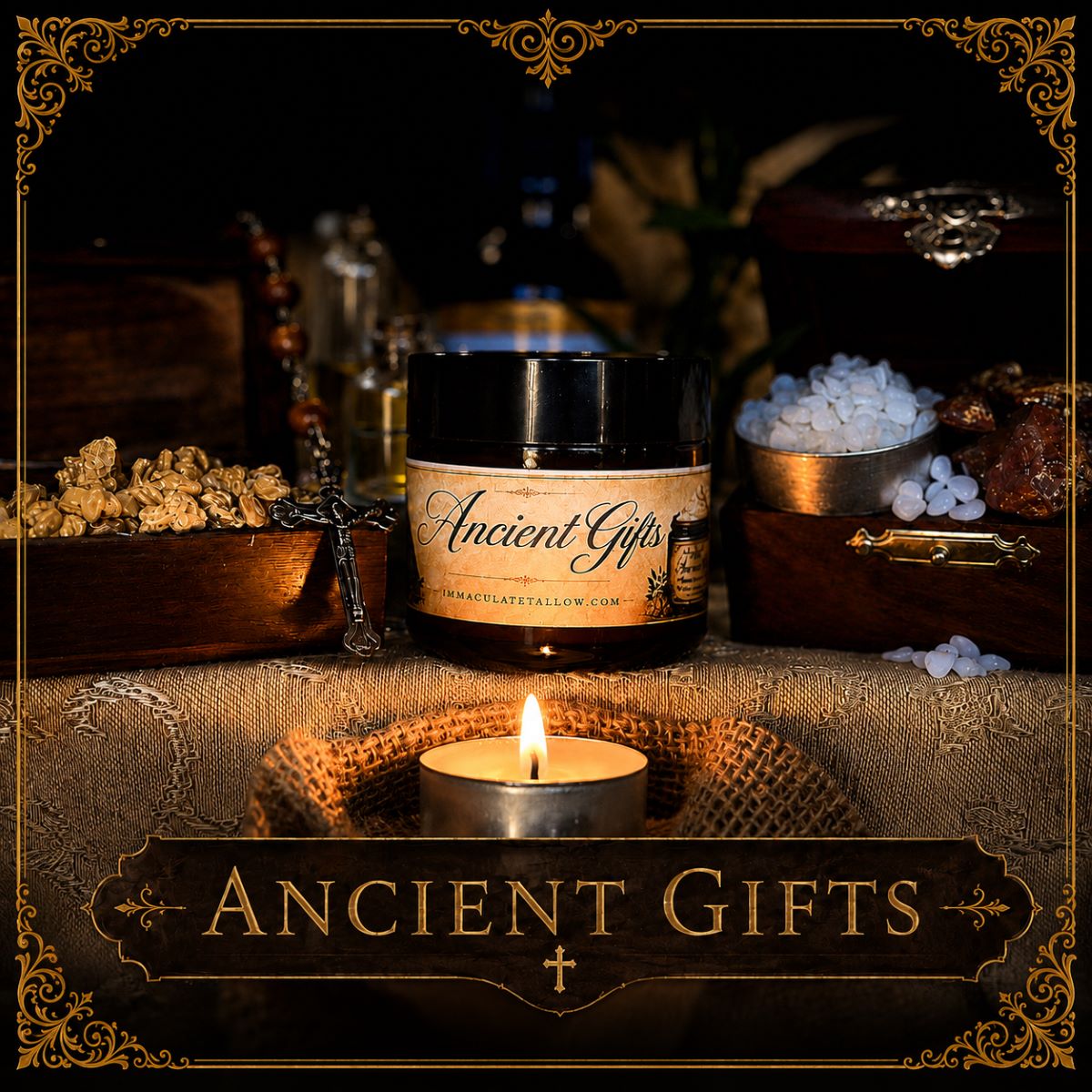
Ancient Gifts
Restore & Renew →
Mystical Rose
Soften & Radiate →Frequently Asked Questions About TEWL
The Sacred Skincare Ritual
Deepen Your Wisdom
The Skin Barrier
Understand the science behind your skin's first line of defense and why it matters more than products.
Read the Ritual →
Best Natural Moisturizer
Why conventional lotions fail dry skin and why bio-compatible fats are the long-term solution.
Read the Ritual →
Why Moisturizers Fail
Are you trapped in a reapplication loop? Discover why water-heavy lotions don't actually heal.
Read the Ritual →
Recent Comments